The Challenges of Transition
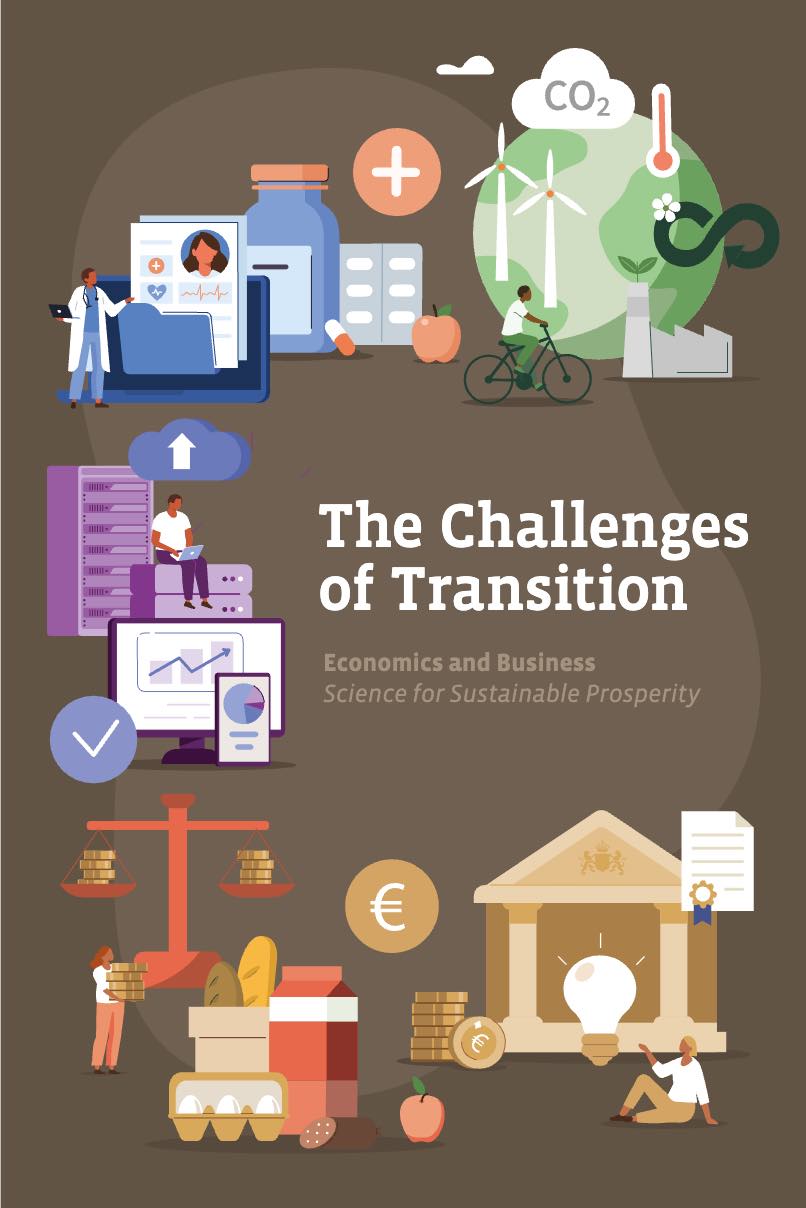
Our society is in the midst of rapid change, facing multiple interacting transitions. The Deans in Economics and Business have selected five societal transitions where Dutch academic Economics and Business can contribute meaningfully to research, education and engagement — together as one discipline.
All three REmagine Awards are organised around these five themes. The annual Impact Forum brings the discipline together to advance the agenda.
Each theme below carries three quick connections: Read the full chapter opens the extended Impact Agenda transcript with subthemes, ongoing research and (future) impact cases; Latest news opens the News monitor pre-filtered on this theme, published by all DEB member schools; REmagine winners opens the awards page that brings together the winners of the REmagine Awards on this theme.
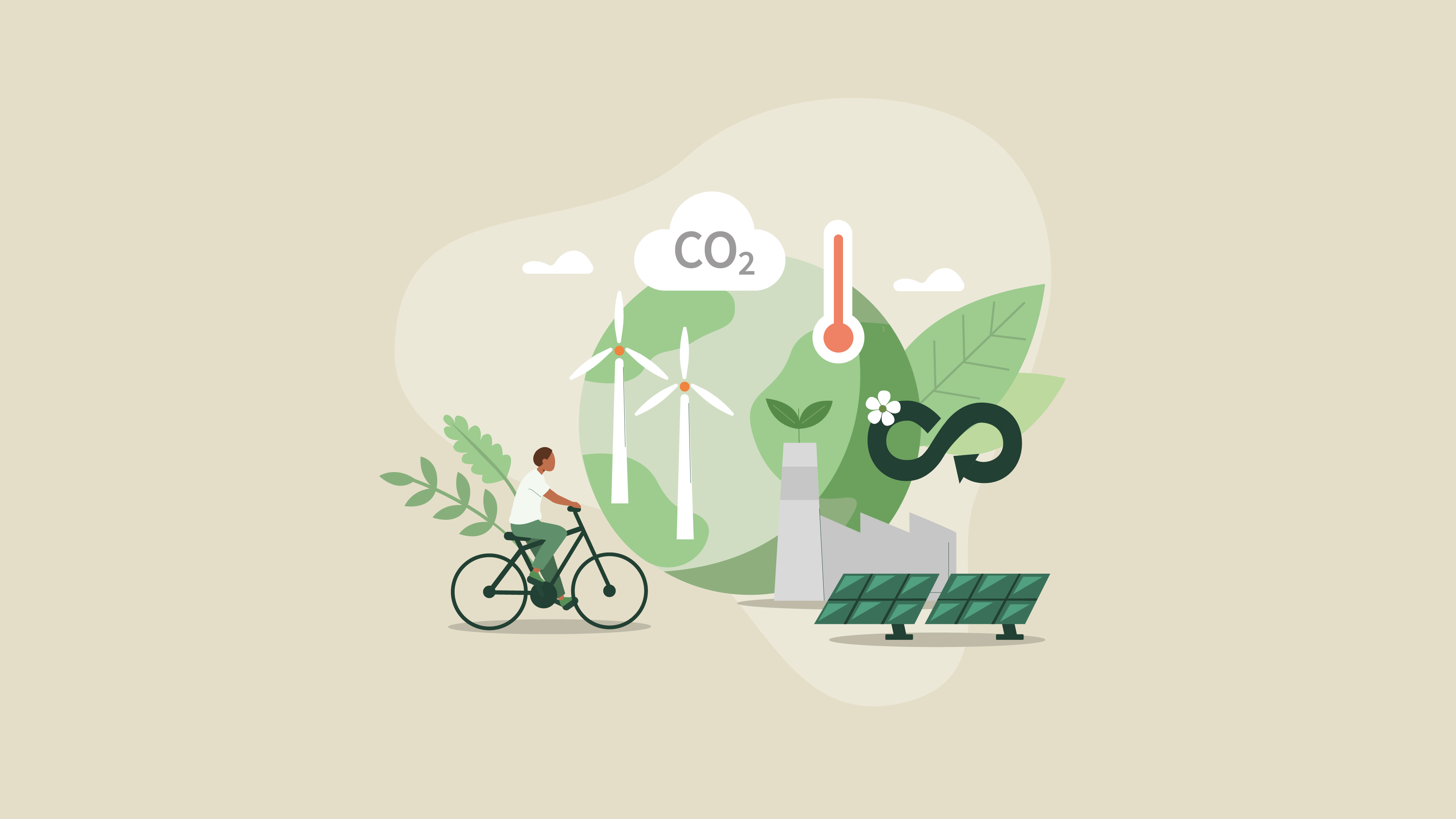
Climate Change & Sustainability
Climate change challenges, on a global scale and with their massive impact on ecosystems and societies, are a relatively new phenomenon for humanity. For the first time, people have to act upon a future from an all-inclusive perspective. The urgency requires commitment to action and a never-wavering sense of urgency.
The European Green Deal, the Dutch Climate Act and the Climate Plan provide the policy framework — but accelerated action and intensified measures are needed. The Economics and Business discipline contributes through behavioural insights, sustainable finance, circular business models, climate policy design and the institutional architecture of the transition.
Broad Perspective on Welfare
Economic science has always been an inquiry into the wealth of societies. Economists look at economic stability and sustainable growth at local, national and international levels — and increasingly at the distribution of welfare beyond GDP.
Equity for prosperity matters on both moral and economic grounds: redistribution can raise welfare in the short term, and excessive inequality undermines investment, productivity and growth in the long term. The discipline contributes through broad-welfare measurement, social-policy design, labour economics, and the analysis of public services and inequality.

Responsible Digital Transformation
We live in a digital era, with rapid technological change led by digital technologies. Digital transformation involves the universal introduction of (big) data and digital technologies — fundamentally changing the landscape of business and markets, the functioning of society, and people's lives.
Artificial intelligence, advanced robotics, smart automation and platform business models redefine market rules. With this transformation come ethical, legal and societal issues — workforce well-being, autonomy, data ethics, regulation under the Digital Markets Act and Green Deal. The Economics and Business discipline researches the trade-offs, governance and impact of digital change.

Future Health & Healthcare
Good, affordable, accessible healthcare is one of the most pressing societal challenges worldwide. The Covid-19 outbreak emphasised the issue, its broader societal impacts, and the urgency of difficult trade-offs to ensure long-term sustainability.
Rising costs (€100bn / 15% of Dutch GDP), staff shortages (1-in-6 today, 1-in-4 projected by 2040) and demographic ageing put the system under pressure. Economics and Business contributes through health-system economics, value-based care design, behavioural health, financing models and the economics of prevention.

Institutional Adaptability
The development and quality of institutions are crucial to a society's coherence, economic performance and overall well-being. Institutions can be strong or weak, trustworthy or corrupt, resilient or rigid — and they never operate in isolation.
Trust is the invisible mechanism that holds societies together. The 2008 financial crisis, recent banking turmoil, and the rise of populist parties exploiting institutional distrust show what's at stake. The discipline contributes through governance research, regulatory design, financial-system resilience, and analysis of how institutions adapt to societal change.

Signed by all DEB deans
The Impact Agenda is signed by all fifteen deans of the Dutch academic faculties in Economics and Business as the representatives of their schools. The DEB membership rotates as deans rotate — what stands firm is the joint commitment of the discipline.
Open access
The Challenges of Transition is published open access on Zenodo (DOI 10.5281/zenodo.10019977). NL + EN editions available as PDF.
From agenda to action
The REmagine Awards recognise impact across the five themes — for Master theses, PhD theses, and senior faculty. The annual Impact Forum brings the community together to advance shared work.